
Cat scratcher houses: why cats love a two-level cardboard house

A cat scratcher house combines three things cats look for in one piece of furniture: a surface to scratch, a place to lie on top, and a hideaway to disappear into. It is the answer for shy cats, for homes with two cats, and for any cat who ignores their bed but moves into every delivery box. Here is what a scratcher house is, who it suits, and what to check before you buy one.
What is a cat scratcher house?
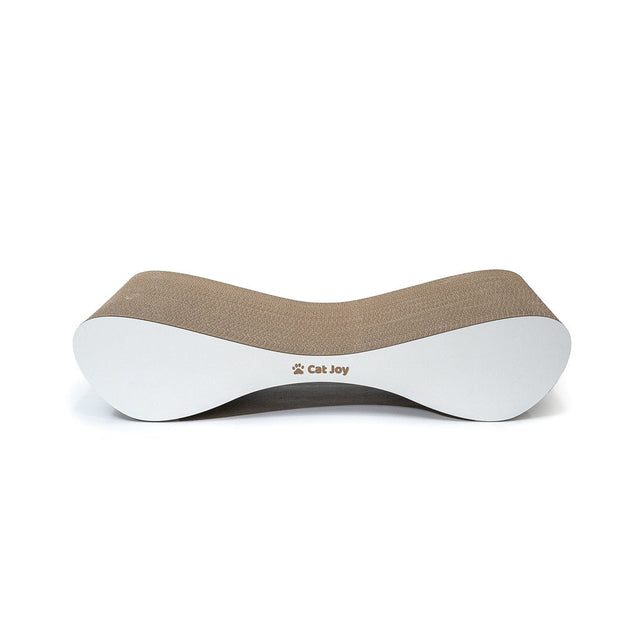
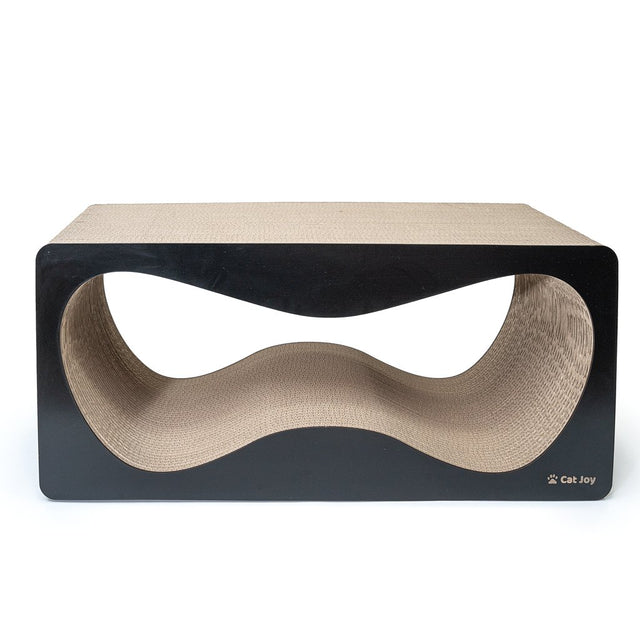
It is a scratcher built on two levels: an open deck on top for scratching, stretching and lookout duty, and an enclosed tunnel or hollow underneath. In a cardboard scratcher house, both levels are made of corrugated board, so the cat can scratch wherever they happen to be — lying on top, or reaching out from inside.
Why cats love a hideaway
- Safety. Cats rest best where they cannot be approached from behind. A hollow with solid walls lets them watch the room without being seen.
- Warmth. Corrugated cardboard traps air and holds body heat — the same reason cats squeeze into boxes.
- Choice. Up top when they want to watch, underneath when they want peace. Cats like options, and a house gives them two spots in the footprint of one.
Two cats, one house
In a home with more than one cat, the ideal is still one scratcher per cat in different rooms — cats like their own territory. When space only allows one, a two-level house is the next best thing: one cat takes the deck, the other the hideaway, and both can scratch without having to share the same patch. It is one of the few pieces of cat furniture two cats will use at the same time without an argument.
What to check before you buy
- Is the hideaway big enough? Your cat should be able to lie inside comfortably, not just poke their head in. Check the inside height and length against your cat.
- Is the top long enough for a full stretch? The rule of paw: at least as long as your cat from nose to base of tail.
- Is it heavy and stable? A cat launching onto the deck puts real force into it. A light house that slides across the floor gets abandoned.
- Is the board dense? Thin single-layer cardboard sags and sheds. Dense multi-layer board keeps its shape under a cat that sleeps on it every day.
- Will you keep it in the living room? Cats use furniture that lives where they live. A house that looks good gets a place by the sofa; one that doesn’t gets hidden away — and ignored.
Where to put a scratcher house
Somewhere with a view of the room and your cat’s usual routes: beside the sofa, under a window, or near where your cat already sleeps. Avoid narrow corridors and dead-end corners — a cat inside the hideaway still wants to see who is coming. If your cat currently scratches a particular piece of furniture, put the house right next to it for the first week.
CAT JOY scratcher houses
- Mews — 76 × 29 × 27 cm, our two-level house: a scratching deck on top and a tunnel hideaway below. Built for two cats or one very large cat.
- Penthouse — 85 × 29 × 39 cm, the XL house: a flat top long enough to be a bed for a Maine Coon, with a cave underneath. Heavy and stable for big breeds and two-cat homes — and, new this autumn on pre-order, the XL Manor and XXL Rotunda.
Both are dense 5-layer corrugated cardboard with a real wood facade in brown, white or black, arrive assembled and come with free UK delivery, 30-day returns and a 12-month guarantee. See them together in large cat scratchers, or compare all eight models in the size guide.
Questions owners ask
Will my cat actually go inside?
Most cats investigate a hollow within the first day — it is the same instinct that sends them into boxes. Help it along by putting a favourite blanket or a pinch of catnip inside for the first few days.
Is a scratcher house good for a shy or anxious cat?
It is one of the best options: the hideaway gives a nervous cat a safe spot in the middle of family life instead of under the bed.
Scratcher house or cat tree?
A cat tree is for climbing and high perches; its scratching sections are often short. A scratcher house is low, stable and made for scratching and resting. Many climbers enjoy both — more on the options in the types of cat scratcher explained.
