
Cat scratch board, pad, mat or post? The types of cat scratcher explained

Shops use half a dozen names for things cats scratch: cat scratch board, scratch pad, scratching mat, scratcher lounge, scratching post, cat tree. Some are genuinely different products; some are the same thing with a new label. Here is what each one is, and which cat it suits.
Cat scratch board
A flat or slightly angled block of corrugated cardboard that sits on the floor. The cat stands on it and scratches downwards and backwards — the same movement they use on a rug or a doormat. Because the cat’s own weight holds it down, a good board does not move. The difference between a cheap board and a good one is density: single-layer board flattens and sheds quickly, while dense multi-layer board lasts many months.
Best for: horizontal scratchers — cats who go for carpets, rugs and the top of the stairs.
Cat scratch pad
Usually a smaller, thinner version of a scratch board, often sold as a refill or in a cardboard tray. Fine for kittens and as a second scratcher in another room; too small for an adult cat to get a full stretch.
Best for: kittens, small cats, travel.
Cat scratching mat
A flat mat of sisal or woven fabric. It rolls up, costs little and can be hung on a wall or laid over a sofa arm. The weak point is grip: on a smooth floor a loose mat slides as soon as the cat pulls, and a scratcher that moves gets abandoned. Fix it down or choose one with a non-slip backing.
Best for: protecting one specific spot, such as a sofa corner.
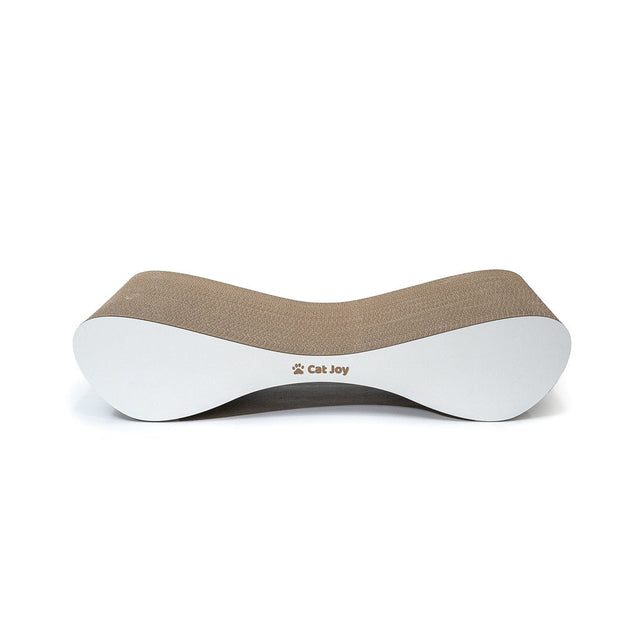
Cat scratcher lounge, bed or sofa
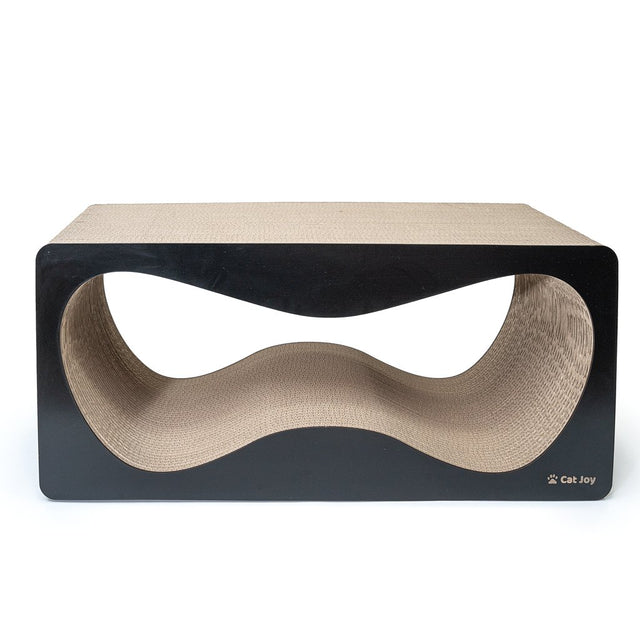
A scratch board grown up: long, wide and shaped so the cat can lie on it. Cats like to nap where they scratch, because scratching leaves their scent behind and makes the spot theirs. Cardboard also holds body heat, so a lounger gets used as a bed for hours a day and as a scratcher in short bursts after every nap. This is the type we make — see the Vanguard lounge, the Loft scratcher bed or the two-level Fusion house.
Best for: most indoor cats, and homes where the scratcher has to live in the living room.
Scratching post
An upright pole wrapped in sisal rope. The classic, and the right answer for a cat who reaches up to scratch door frames and sofa sides. Two things decide whether it works: height (an adult cat needs to stretch fully, so around 80 cm or more) and a base heavy enough that it never rocks.
Best for: vertical scratchers.
Cat tree
Platforms, hideaways and scratching posts in one tower. Great for climbing and for high-up sleeping spots; the scratching sections are often short, so many cats with a tree still need a proper scratcher.
Best for: climbers and multi-cat homes with floor space to spare.
So which one should you buy?
- Watch how your cat scratches now. Up the furniture means a post; down into the rug means a board or lounger. More on this in horizontal vs vertical scratchers.
- Size it to your cat: at least as long as they are from nose to base of tail. See what size scratcher does your cat need?
- Choose sisal or dense cardboard, never carpet — here is why.
- Put it where your cat already spends time.
Many homes end up with two: a tall post by the door and a cardboard lounger in the living room. Browse all six sizes of CAT JOY cardboard cat scratchers, from 54 to 84 cm.
