
New scratcher? How to get your cat using it in 24 hours

Good news first: with cardboard you rarely need to ‘train’ anything — the texture does the persuading. But a few small choices in the first day make the difference between ‘their favourite spot’ and ‘expensive floor decoration’.
The 24-hour checklist
1. Let the box do the marketing
Open the parcel on the floor and step back. Most cats investigate immediately — new object, cardboard smell, crinkly paper. Let them claim it before you’ve even decided where it goes.
2. Put it where the action is
Living room, next to the sofa, near the window perch — wherever your cat already spends the evening. Scratching is partly territorial display; nobody displays in the spare room. If you’re fixing a sofa-scratching habit, place it touching the crime scene.
3. One pinch of catnip
Rub it into the corrugated surface. Roughly two cats in three respond to catnip — for them this shortcuts the whole process. (Kittens under 6 months often don’t react yet; skip to step 4 — and see our kitten scratcher guide.)
4. Play across the surface
Drag a wand toy or a ribbon across the scratcher. When paws land on cardboard mid-hunt, claws dig in — and that first dig is the moment the sale is made. One good play session usually seals it.
5. Do nothing else
Don’t pick your cat up and place them on it, and never hold their paws to ‘show them’ — that builds suspicion, not habit. Cats decide; you just stack the odds.
If your cat is the rare sceptic
Leave it in place for two weeks — slow warm-ups are common with cautious adults. Refresh the catnip weekly, keep casual play going near it. Still no luck? Email meow@catjoy.uk with a photo of where the scratcher stands, and we’ll suggest a better spot or a shape that suits your cat.
Which one to unbox?
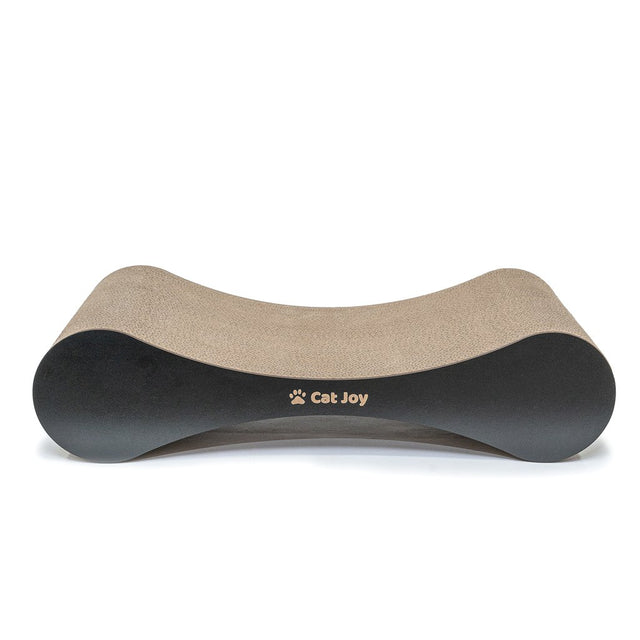
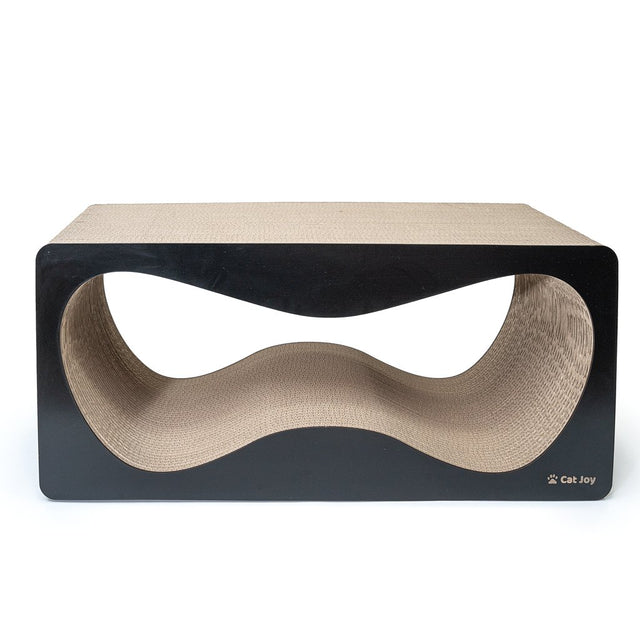
Kittens and small cats take to a low Snug (59 cm) fastest; most adult cats to the curved Lounge (70 cm); bigger cats to the Terrace scratcher bed (77 cm).
