
Kitten scratchers: when to start and what to buy

Kittens start scratching almost as soon as they are steady on their feet — and they are the easiest cats to teach. The habit a kitten forms in the first months at home usually sticks for life, which makes the first scratcher more important than any you will buy later. Here is when to start, what to look for in a kitten scratcher, and how to get a kitten using it instead of the sofa.
Why kittens scratch
Scratching is not naughtiness. It does three jobs at once: it sheds the worn outer layer of the claws, it gives the back and shoulders a proper stretch, and it leaves a scent from glands in the paws that says “this spot is mine”. A kitten with a good place to do all three has far less reason to go looking for the arm of your sofa or the carpet at the top of the stairs.
When to give a kitten a scratcher
The day they come home. Put the scratcher down before any other habit forms. Once a kitten has decided the stair carpet belongs to them, you are no longer teaching — you are redirecting, which takes longer. A kitten that finds a good scratcher in the first week rarely looks elsewhere.
What a good kitten scratcher needs
- Low and stable. Small legs, big enthusiasm. A kitten should be able to step straight on and dig in. A tall post that wobbles even once can put a young cat off for weeks.
- Long enough to grow into. The rule of paw is simple: the scratching surface should be at least as long as your cat from nose to base of tail. Size it for the adult your kitten will become, not the kitten in front of you. A 54–63 cm scratcher suits most cats up to 4–6 kg.
- The right texture. Corrugated cardboard gives slightly under the claw — the resistance kittens look for. Avoid carpet-covered scratchers: they teach a kitten that carpet is for scratching.
- Dense board. Thin single-layer pads flatten and shed quickly. Dense multi-layer cardboard keeps its shape for many months.
Kitten scratch pad or a scratcher to lie on?
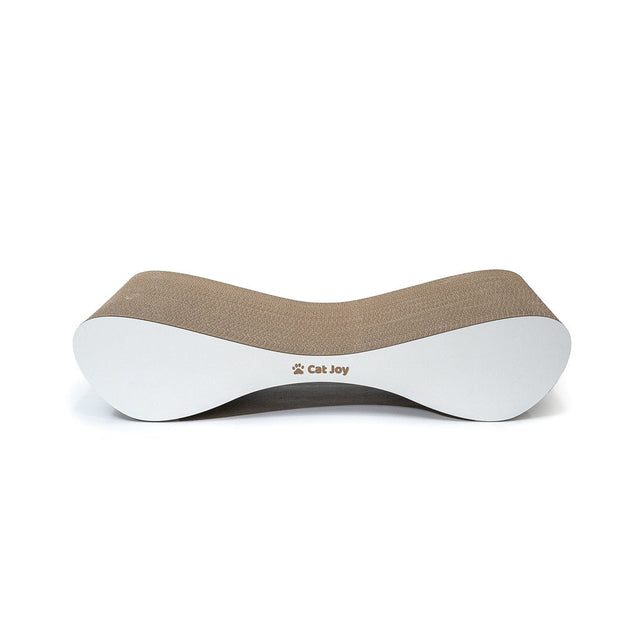
A small kitten scratch pad is fine as a starter or as a second scratcher in another room. But kittens sleep a lot, and cats like to sleep where they scratch — the scent they leave makes the spot feel safe. A slightly bigger scratcher shaped to lie on gets used for both, which is why so many kittens adopt a cardboard lounger as their bed within days.
How to teach a kitten to use a scratcher
- Put it where your kitten spends time — near where they sleep and in the room where the family sits, not in a spare room.
- Play across it. Drag a wand toy or a ribbon over the surface. When little paws land on cardboard mid-pounce, the claws dig in — and that first dig is usually all it takes.
- Reward the right choice. A treat or a bit of play every time you see the scratcher being used.
- Never hold their paws to “show them”. It builds suspicion, not a habit.
- Don’t rely on catnip yet. Many kittens under about six months don’t react to it. Play works better at this age.
If your kitten is already scratching furniture, move the scratcher right next to the spot and follow our one-week plan to redirect a cat from the sofa.
How many scratchers does a kitten need?
One is a start; two is better. Ideally put one where your kitten sleeps and one in the living room. Cats scratch to mark the places that matter to them, so a scratcher in each of those places does more than one big scratcher in a corner.
Which CAT JOY scratcher for a kitten?
- Modern — 54 × 13 × 25 cm. Low, light and stable, for kittens and cats up to 4 kg. Narrow enough for a windowsill and easy to move from room to room.
- Bionics — 63 × 14 × 28 cm. A gentle curve a kitten can grow into; it suits most adult cats up to 6 kg, so it will not need replacing when your kitten grows up.
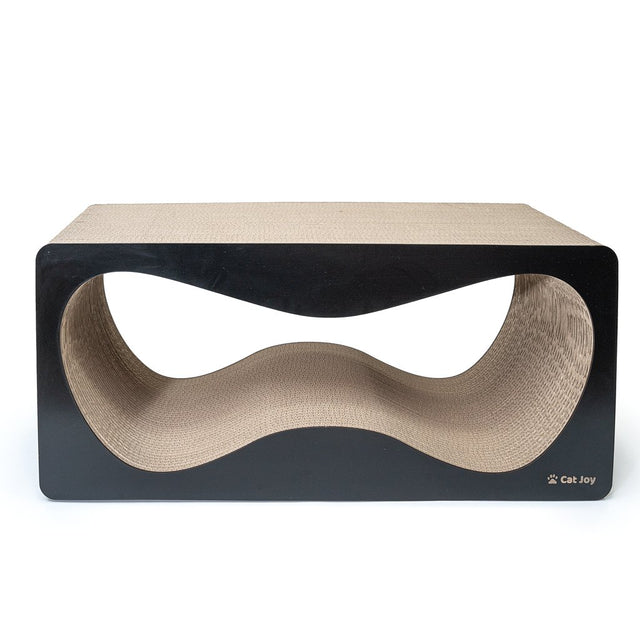
Both are made from dense 5-layer corrugated cardboard with a real wood facade in brown, white or black. They arrive assembled, both faces can be scratched — flip it when one side wears — and they come with free UK delivery, 30-day returns and a 12-month guarantee. See both in kitten scratchers, or check the size guide if your kitten is a large breed.
Questions owners ask
Do kittens really need a scratcher?
Yes. Scratching is a need, not a phase. Giving a kitten the right place early is far easier than breaking a furniture habit later.
What size scratcher should I buy for a kitten?
Buy for the adult cat: at least as long as your cat will be from nose to base of tail. For most cats that means 54–63 cm; for large breeds such as Maine Coons, look at 77 cm or more — our guide to what size scratcher your cat needs goes through it.
Is a horizontal scratcher better than a post for a kitten?
For most kittens, yes: it cannot tip over, and kittens naturally dig into flat surfaces such as rugs. Some cats later enjoy a tall post as well — more in horizontal vs vertical scratchers.
