
Why do cats love cardboard boxes?

You spend good money on a cat bed; your cat climbs into the box it came in. Every cat owner has seen it, and it is not a quirk of one cat — it is how cats are built. Understanding why cats love cardboard boxes explains why a cat scratch box or a cardboard cat bed works so well, and how to give your cat the same thing without a stack of delivery boxes in the living room.
Why cats can’t resist a cardboard box
1. It feels safe
Cats are hunters, but they are also small enough to be prey. An enclosed space with solid sides means nothing can approach from behind, and they can watch the room without being seen. A box is a ready-made hiding place — which is also why a new or stressed cat often heads straight for one.
2. It is warm
Corrugated cardboard is full of tiny air pockets that trap heat. Cats like it warmer than we do, and a cardboard box holds their body heat around them. It is the same reason they choose sunny windowsills and the top of the radiator.
3. It is perfect to scratch
Cardboard gives slightly under the claw — the exact resistance cats look for. A box is something to sleep in and something to scratch in one, and cats like to sleep where they scratch.
4. It smells like them
Every scratch and every nap leaves a little of your cat’s scent. After a day or two, the box is “theirs”, which makes it even more appealing.
5. It is new
Cats investigate anything new in their territory. A box that appears in the middle of the room is simply too interesting to ignore.
The problem with the delivery box
A delivery box is thin single-layer board. It gets shredded, collapses under a sitting cat, tears at the corners and ends up in the recycling within a week or two. It also looks like, well, a box in your living room. What your cat actually wants is the combination of warmth, safety and scratchable cardboard — in something that lasts.
Scratch box, cardboard bed or scratcher house?
- Cat scratch box — a tray or low box filled with a cardboard scratch pad. Good as a small, cheap second scratcher.
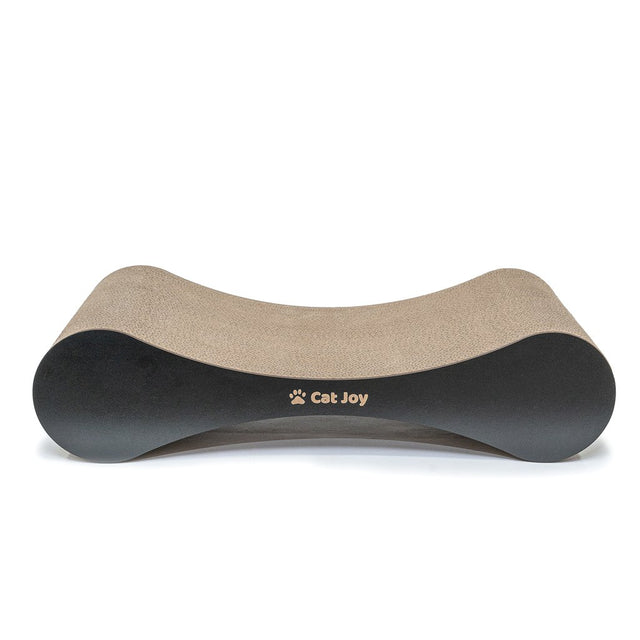
- Cardboard cat bed or lounger — a dense cardboard block shaped for lying on, with raised ends to curl against. Your cat scratches it after every nap and sleeps on it the rest of the time. Our Terrace (77 cm) and the curved Lounge (70 cm) are this type.
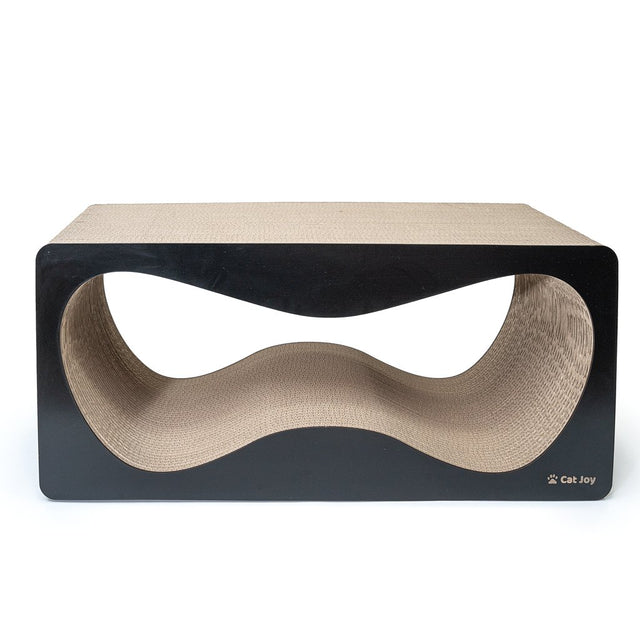
- Cardboard scratcher house — a box and a bed in one: a deck on top and a tunnel underneath, closest to what a cat gets from a box. See Mews (76 cm) and the XL Penthouse (85 cm), or read more in cat scratcher houses explained.
How to move your cat from the box to a scratcher
- Put the new scratcher exactly where the box has been.
- For the first few days, leave the old box next to it — or put the scratcher inside the open box.
- Add a pinch of catnip or a familiar blanket to the scratcher.
- When your cat is using the scratcher, retire the box.
Most cats switch within a day or two. There are more tips in how to get your cat using a new scratcher in 24 hours. And when your CAT JOY arrives, let your cat have the box it came in first — it is part of the fun.
Questions owners ask
Is cardboard safe for cats?
Scratching and lying on cardboard is safe and natural. Cats do tear off small flakes while scratching; that is normal. If your cat actually eats cardboard in quantity, speak to your vet. Our scratchers are made with water-based glue.
Why does my cat ignore their bed but sleep in a box?
Most soft beds are open on all sides and do not hold heat the way cardboard does. A cardboard bed with raised sides or a hideaway gives your cat what the box does, in a form that lasts.
How long will a cardboard cat bed last?
Much longer than a box. Dense, multi-layer board typically lasts a year or more with one cat — see how long a cardboard scratcher lasts.
